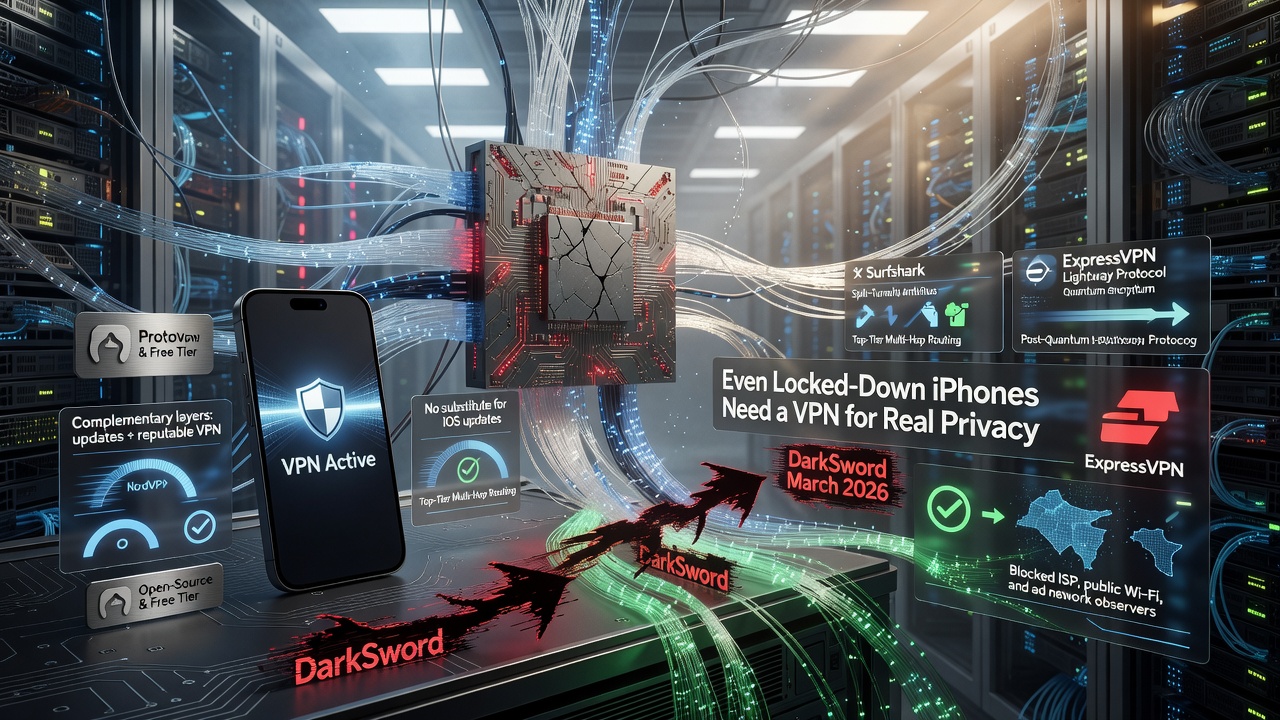
An iPhone running the latest version of iOS is one of the most hardened consumer devices on the market, yet it is not immune to compromise. A malicious campaign known as DarkSword surfaced as recently as March 2026, targeting iPhones on versions of iOS prior to 26 and siphoning user data before Apple could patch the hole. The episode is a reminder that device-level security, however sophisticated, does not cover every gap in a user's digital life.
Why Apple's Protections Aren't the Whole Story
Apple has built its reputation on tight integration between hardware and software, sandboxing apps, encrypting data at rest, and restricting what third-party developers can access. That architecture genuinely limits the attack surface. But it was never designed to stop network-level surveillance. Internet service providers, public Wi-Fi operators, and advertising networks can still observe which domains a phone connects to, and attackers who find a software flaw, as with DarkSword, can exploit it regardless of how well the rest of the operating system is locked down. A VPN does not patch vulnerabilities, but it encrypts the connection between a device and the internet, making it far harder for anyone sitting on that network path to monitor browsing activity or intercept unsecured traffic.
What a VPN Actually Changes on an iPhone
A VPN routes traffic through an encrypted tunnel to a remote server, masking the device's IP address and shielding data from local network snoops, a meaningful upgrade on open or shared Wi-Fi where interception is trivial. It does not make a phone invisible, and it cannot stop malware that has already found its way onto a device through a compromised app or an unpatched exploit. The value lies in closing a specific, well-understood gap: the moment data leaves the phone and travels across a network that the user does not control.
How the Leading Options Compare
After more than a decade of testing, several services stand out for iOS use, each with distinct trade-offs.
- Proton VPN offers a genuinely usable free tier, open-source apps, and annual third-party audits, making it the strongest choice for users who prioritize transparency and value over bleeding-edge speed.
- NordVPN pairs top-tier speed with a dense feature set, including threat protection and multi-hop routing, at a premium price point.
- Surfshark supports split tunneling on iOS, a rarity on that platform, and bundles antivirus and identity tools into one subscription.
- ExpressVPN brings its own Lightway protocol and early post-quantum encryption support, positioning itself for threats that have not yet fully materialized.
What to Weigh Before Choosing
No VPN is a substitute for keeping iOS updated, since most real-world exploits, DarkSword included, target outdated software rather than the network layer. Logging policies deserve scrutiny: a provider's jurisdiction and audit history matter more than marketing claims. Free services can be legitimate, as Proton demonstrates, but users should understand how a free tier is funded before trusting it with sensitive traffic. For most iPhone owners, the sensible approach combines prompt software updates with a reputable VPN, treating the two as complementary layers rather than interchangeable protections.