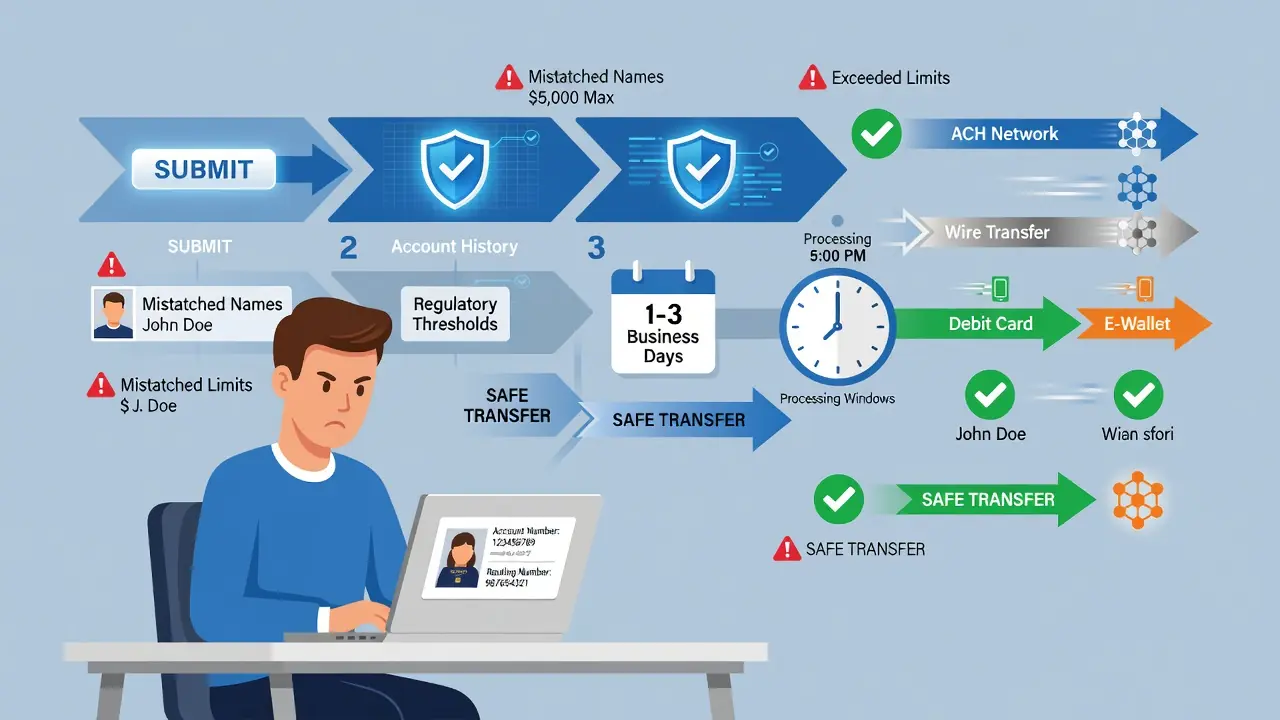
A withdrawal request that takes ninety seconds to submit can take three business days to settle. That gap between action and outcome confuses more account holders than almost any other part of managing money online. The delay isn't a glitch - it's the result of verification checks, banking networks, and processing windows that most platforms never explain clearly.
Understanding the cash withdrawal process removes that confusion. Every platform that holds your money, whether a bank, a brokerage, or a digital wallet, follows a similar sequence: you request the funds, the platform verifies your identity and account details, then it releases the money through a payment network. Anyone unfamiliar with these steps can review a detailed breakdown of how to withdraw your money before submitting a request, which helps avoid unnecessary rejections or delays. The middle steps - verification, batching, and network transfer times - are where most of the waiting happens.
This piece walks through each stage of that process: how to withdraw funds from account balances correctly, how to transfer money to bank accounts without triggering security flags, and what actually determines how long withdrawals take. The goal is practical clarity, not vague reassurance.
Understanding the Cash Withdrawal Process
What Happens Behind the Scenes
Every withdrawal request moves through three distinct phases: submission, verification, and settlement. Submission is instant - you click a button, enter an amount, and confirm a destination. Verification is where the platform checks that the request matches your account history, identity records, and any regulatory thresholds. Settlement is the actual movement of money through banking or card networks, and it's this final phase that consumes most of the elapsed time.
Why Verification Exists
Verification isn't bureaucratic friction for its own sake. It protects both the platform and the account holder from fraud, account takeovers, and money laundering schemes that rely on fast, unchecked transfers. A withdrawal request from a new device, a different location, or an unusually large amount will almost always trigger additional review. This is normal and expected, not a sign that something has gone wrong.
Common Withdrawal Methods
Most platforms offer a small set of withdrawal channels, each with different speed and cost profiles:
- Bank transfer (ACH or wire) - reliable, moderate speed, minimal fees
- Debit card withdrawal - often faster, sometimes with a small processing fee
- E-wallet transfer - near-instant in many cases, subject to platform limits
- Check by mail - slowest option, largely obsolete but still offered by some institutions
How to Withdraw Funds from Account Safely
Verifying Your Identity Correctly
Identity verification is the single biggest source of withdrawal delays. Submitting a blurry photo ID, mismatched name spelling, or an outdated address will stall a request regardless of how much money is involved. Before requesting a withdrawal, confirm that your registered name matches your bank account exactly, and that any uploaded documents are current and legible.
Choosing the Right Withdrawal Method
Not every method suits every situation. Bank transfers work best for larger sums where security matters more than speed. Card withdrawals suit smaller, routine amounts. Matching the method to the purpose of the withdrawal reduces both cost and waiting time.
Avoiding Common Mistakes
Many failed or delayed withdrawals trace back to avoidable errors:
- Entering an account number with a transposed digit
- Requesting a withdrawal that exceeds a daily or monthly limit
- Attempting to withdraw to a bank account not registered under your name
- Ignoring a pending verification email that blocks further action
Double-checking these details before submission prevents the majority of processing failures.
How to Transfer Money to Bank Accounts Without Delays
Linking Your Bank Account Properly
A correctly linked bank account is the foundation of a smooth transfer. This usually means confirming ownership through a small test deposit or instant verification via banking credentials. Skipping this step, or linking an account that doesn't match your verified identity, is one of the most common causes of rejected transfers.
Domestic vs. International Transfers
Domestic transfers typically clear within one to three business days through standard clearing networks. International transfers involve currency conversion, intermediary banks, and compliance checks specific to cross-border movement, which stretches the timeline considerably and often adds fees that aren't obvious upfront.
Fees and Limits to Expect
Banks and platforms often apply a tiered fee structure - free or low-cost for standard transfers, higher for expedited or wire transfers. Daily and monthly withdrawal caps also apply, particularly for new accounts still building a transaction history. Reviewing these limits ahead of time avoids the frustration of a partially processed request.
How Long Withdrawals Take: Realistic Timeframes
Standard Processing Windows
Most withdrawal requests fall into predictable time bands. Card and e-wallet withdrawals often settle within a few hours to one business day. Standard bank transfers typically take one to three business days. Wire transfers, while faster in transit, still require a processing cutoff and can take a full business day even for domestic transfers.
Factors That Slow Things Down
Several variables extend the standard timeline:
- Requests submitted on weekends or public holidays
- First-time withdrawals requiring extra identity checks
- Large amounts flagged for manual review
- Errors in banking details requiring resubmission
What "Pending" Actually Means
A pending status doesn't mean a request has failed. It usually indicates the funds have left the originating account and are moving through a clearing network, waiting for the receiving bank to post them. Contacting support before this window closes rarely speeds things up and often just adds another support ticket to an already automated queue.
Best Practices to Withdraw Money Safely
Recognizing Legitimate Requests for Information
Legitimate platforms never ask for a full password or one-time verification code over phone or email. Any request for these details, framed as necessary to "complete" a withdrawal, is a fraud attempt. Genuine verification happens within the platform's own secure interface.
Securing Your Account Before You Withdraw
Enabling two-factor authentication, using a unique password, and confirming that your registered email and phone number are current all reduce the risk of an intercepted withdrawal. These steps take minutes and prevent the kind of account compromise that turns a routine transfer into a dispute lasting weeks.
Keeping Records of Every Transaction
Screenshots or confirmation emails documenting the amount, date, and destination account create a paper trail that proves invaluable if a transfer goes missing or a dispute arises. Banks and platforms generally resolve these faster when the account holder can supply exact transaction references.
Frequently Asked Questions
Why was my withdrawal request rejected immediately?
Instant rejections usually stem from mismatched account details, an unverified identity document, or a request exceeding your current withdrawal limit. Review the exact error message, since most platforms specify which field caused the failure.
Can I speed up a pending bank transfer?
Once a transfer enters the banking network, the originating platform has no further control over its speed. Contacting your receiving bank directly sometimes clarifies whether the delay sits on their end rather than the sender's.
Is it safe to withdraw large amounts in a single transaction?
Large withdrawals are safe when your identity is fully verified and the destination account matches your name. Expect additional review time, since most platforms flag high-value transactions for manual confirmation regardless of account history.
What should I do if my withdrawal never arrives?
Wait until the stated processing window fully lapses, then contact support with your transaction reference number. If the platform confirms the funds were sent, the next step is checking with your bank, since delays past this point often sit with the receiving institution.
Do withdrawal fees vary by method?
Yes. Bank transfers are usually the cheapest option, e-wallets fall in the middle, and wire transfers or expedited card withdrawals typically carry the highest fees due to faster processing guarantees.
Does withdrawing frequently affect my account standing?
Frequent withdrawals themselves aren't penalized, but unusual patterns - such as withdrawing immediately after every deposit - can trigger additional fraud checks. Consistent, predictable activity generally processes faster than erratic transaction behavior.